
ETHNOGRAPHIC HERITAGE
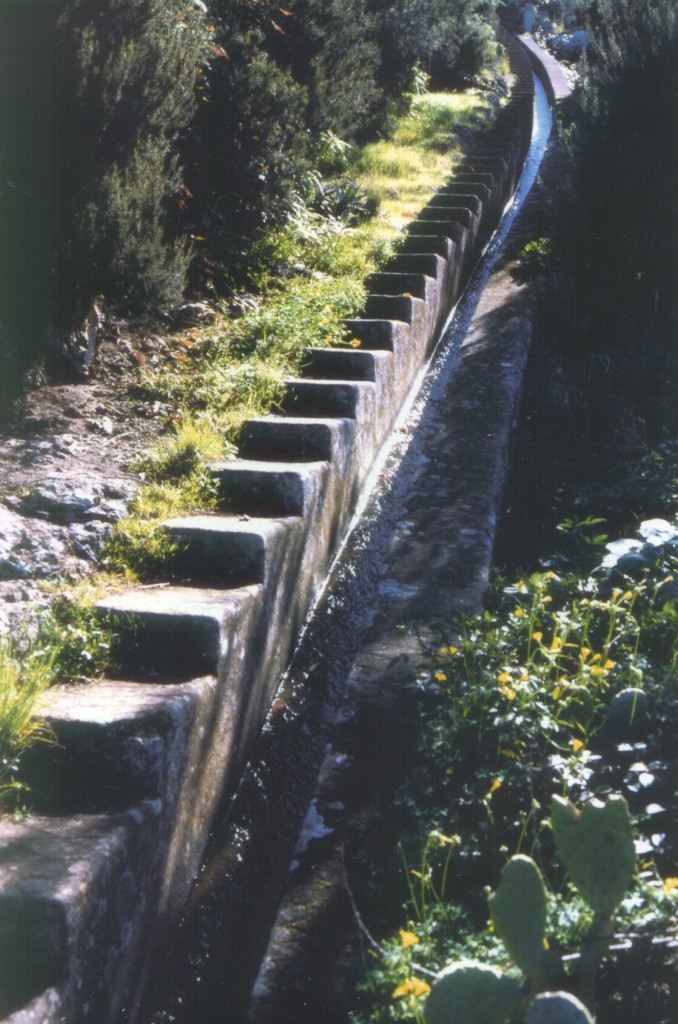
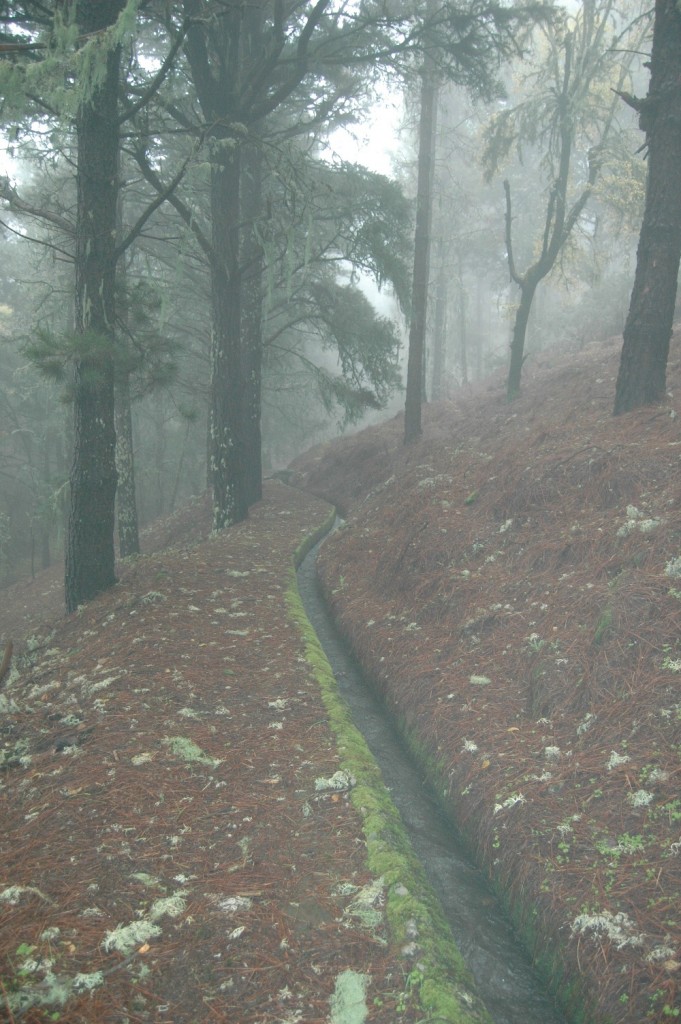
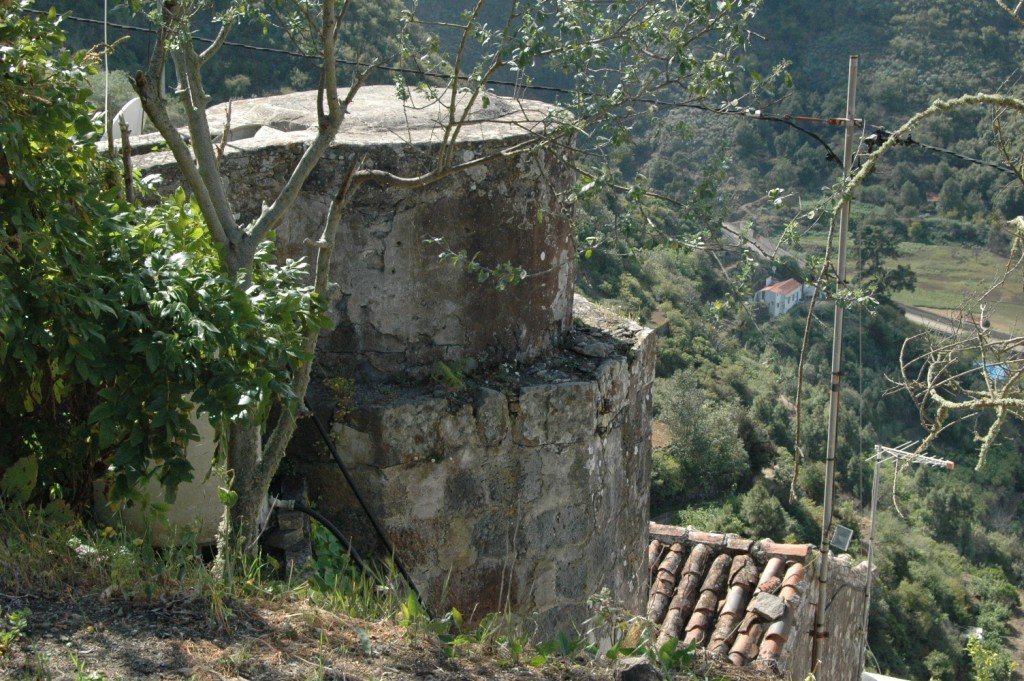
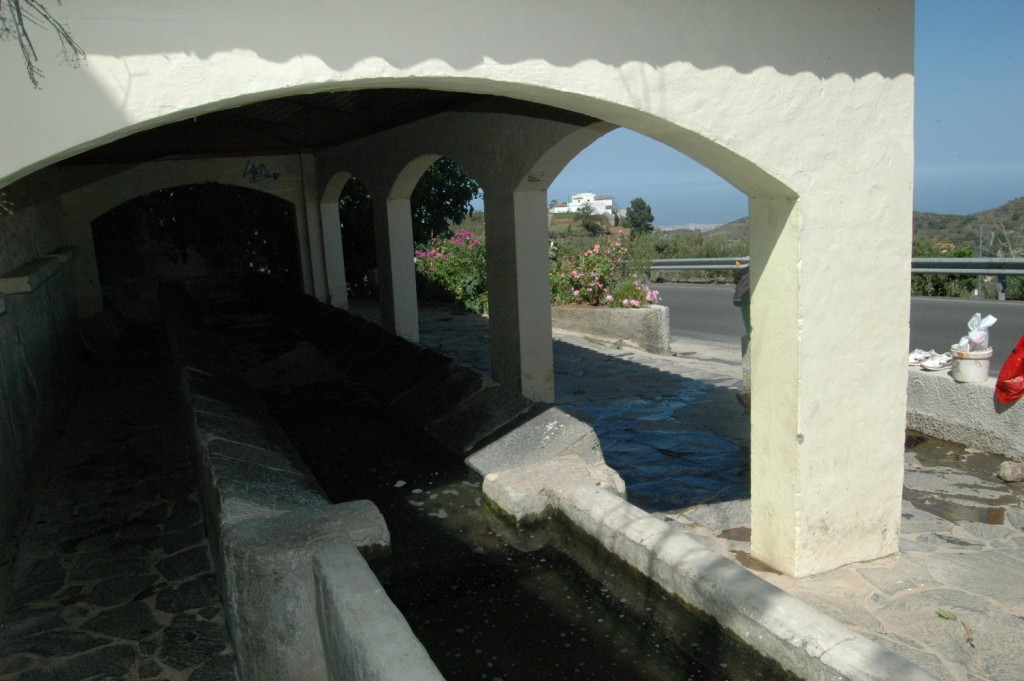
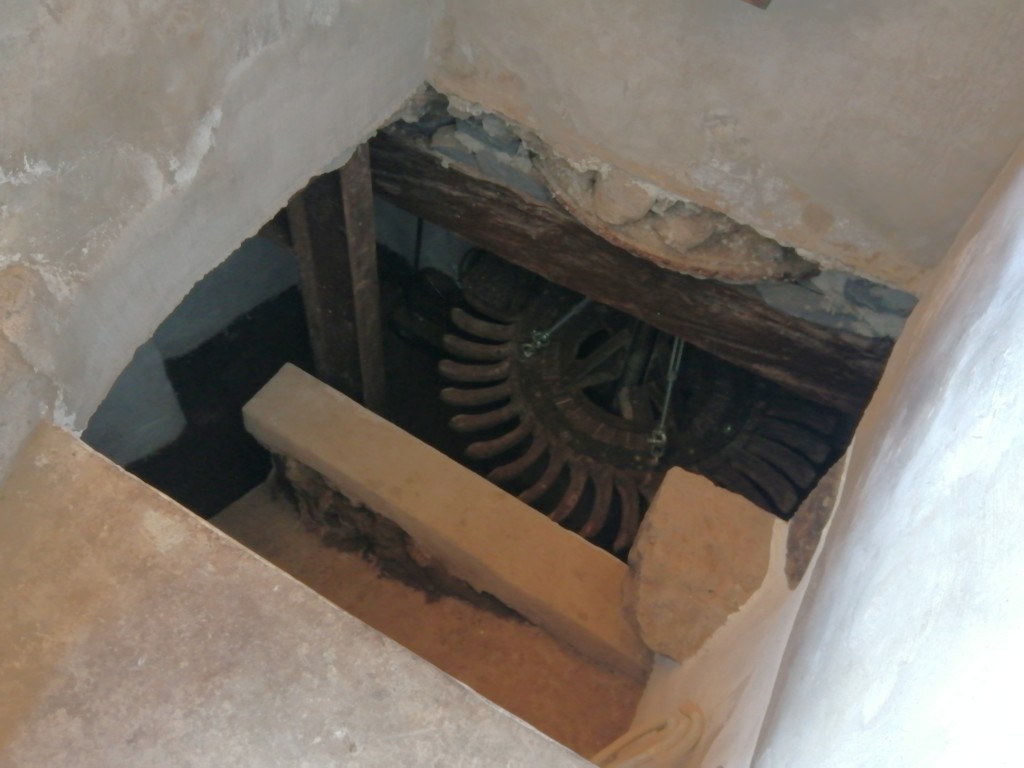
The main ethnographic elements within the community revolve around our abundance of fresh water (irrigation canals, water-saving basins, sinks, water mills, water wells or water cycles) and the economic establishments (houses, Wirtschaftshöfe, Hofräume, caves or stables).
Water is one of the main resources of Valleseco. For this reason you find several irrigation canals for the transport of water, as well as dams and irrigation canals. The most important are the Acequia de La Cumbre, La Acequia de Crespo, and la Acequia Honda (acequia = irrigation canal). Many projects were constructed so that the population could take advantage of our abundance water. These water resources became community gathering poinits were neighors would come together and work. Los lavaderos were made of stone and the people could wash their clothing and take away jugs of water for personal use. Nowadays, town's women still regularly use los lavadores. The old mills spread along the Acequia Honda, belonging to the la Heredad de Aguas de Arucas Firgas, are being restored.
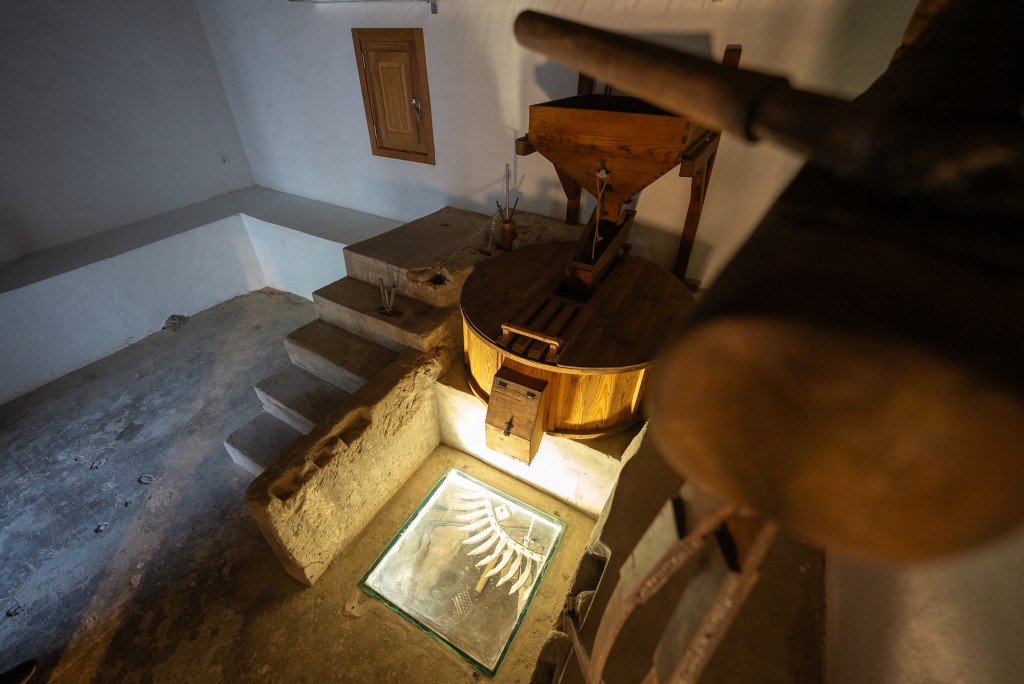
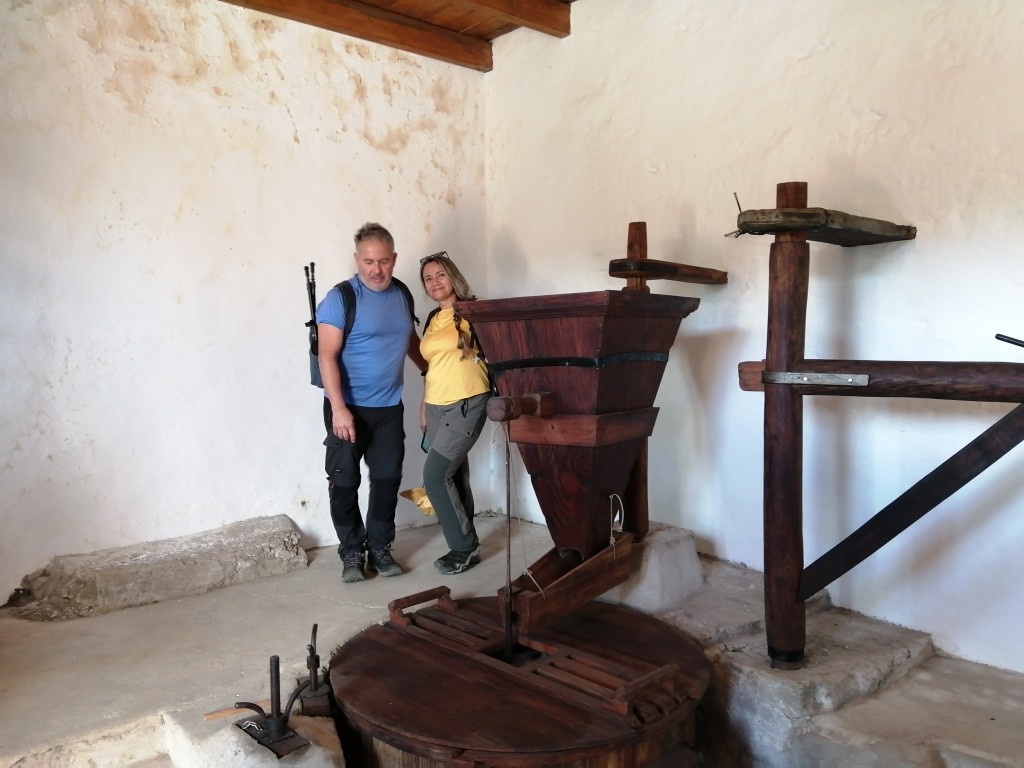
The Huerta Grande's Mill or Valsendero Mill was built in 1874, when D. Bartolomé González Rodríguez asked for permission to use the water of Heredad de Aguas de Arucas y Firgas* to move the mechanism of the mill. It has a mill pond 12 metres high and it was working up to the seventies. Valleseco town hall restored it recently. The grinding stone and the mechanism belongs to the Fire Mill of San Vicente Ferrer, which was working up to 2019 in the centre of Valleseco. It moved with the force of the water that flowed down Acequia Honda, collected from the Barranco de la Virgen and taken to Arucas and Firgas.The process of grinding the wheat or corn was as follows. Water with great pressure fell like a waterfall because of the height of the mill pond, and moved a large circular stone which revolved over another static one, grinding the grain as a result. Mills played an essential role in those days. In them, corn and wheat were ground to obtain “gofio” (corn flour) and flour, basic products in scarce times. They were placed beside “caminos reales” .
*A group of owners who share the rights of using the water of these ravines.
Of special interes is the Etnographic Ensemble of El Molinete. In the past, two mills were located here, El Molinete and the Molino de Abajo, built at the end of the 19th century. They moved with the force of the waters that flowed down the Acequia Honda, collected from the Barranco de la Virgen and taken to Arucas and Firgas. Today, you can still see the canal and the steps where the "acequiero" used to go up to check the condition of the canal and, in front of it, the house of the Molinete mill, recently restored, and the circular construction of the cube. Then there is the laundry room and, at the end of it, the other cube belonging to the Molino de Abajo, which was located below. Google Maps
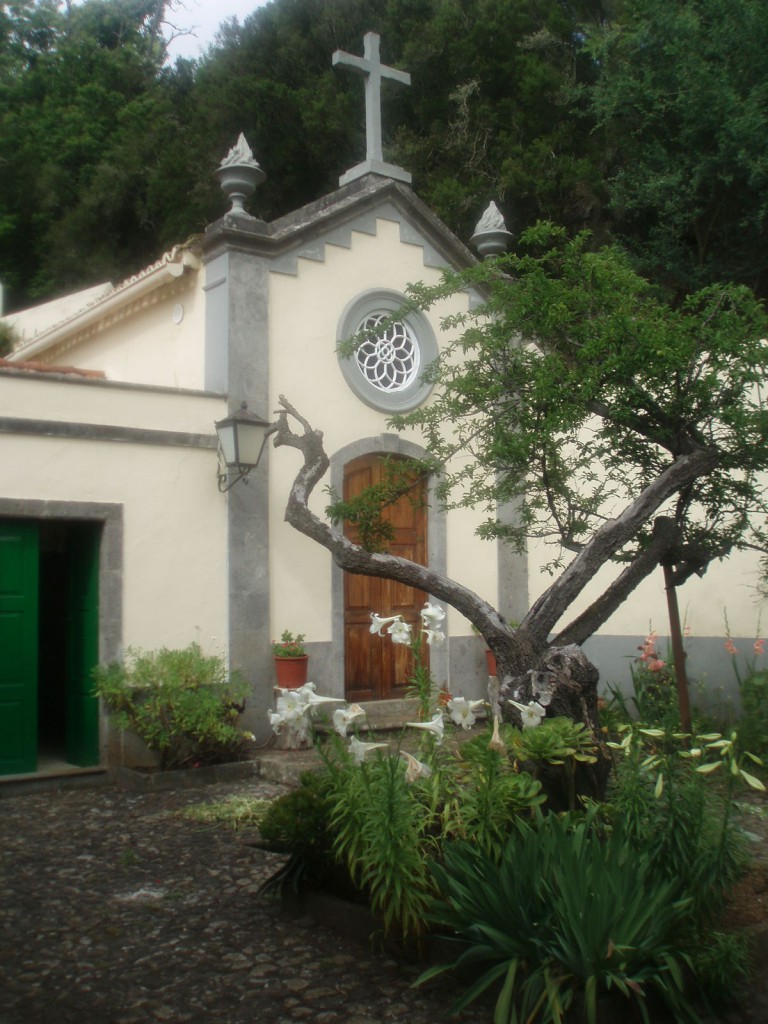
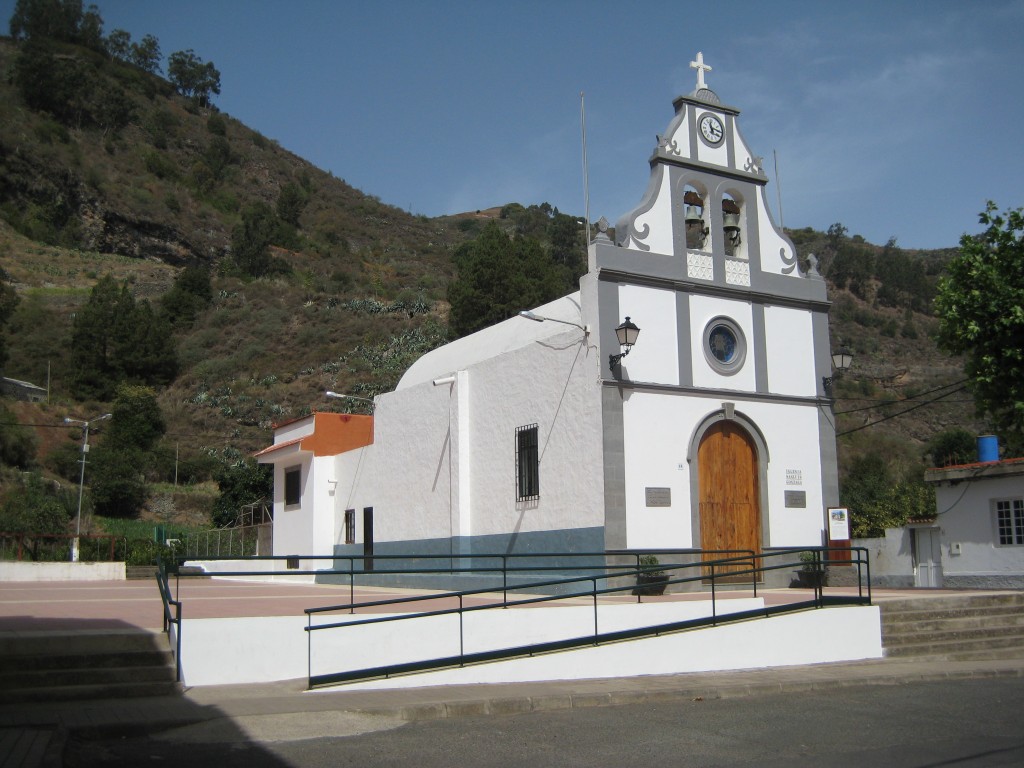
Other important ethnographic buildings are the Hermitage of San Luis Gonzaga in the neighbourhood of Valsendero and the Hermitage of la Virgen de la Silla in Caserón. In this area there are many examples of old Canarian houses. One of them is this hermitage dating from the mid-nineteenth century. It belongs to the Rodríguez Pérez family, which is known as the family iof the priests, because there were several priests in it. Hence, there is an small chapel where the residents of the place and the pilgrims who came along the royal road to pay their promises to the Virgen del Pino in Teror heard mass. Google Maps
